
No. 02
Fine Art & Paintings
in Pompano Beach
Oils, watercolours, bronzes, and prints.
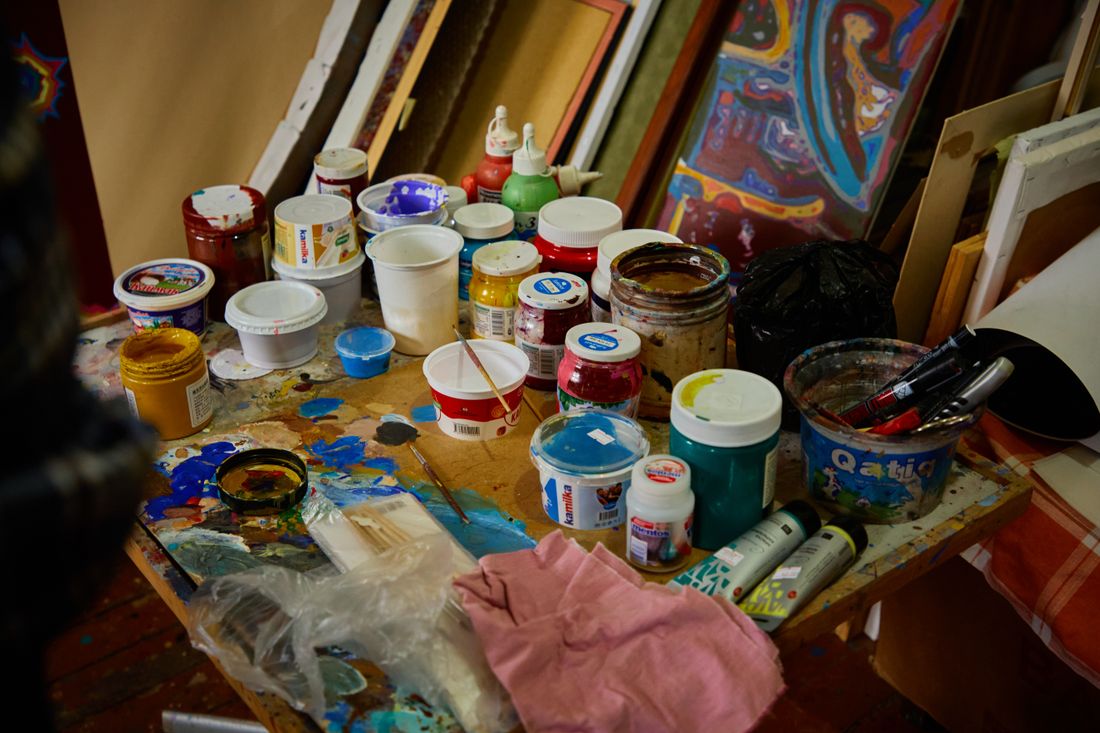
The signature is the easiest part of a painting to fake. The canvas, stretcher, varnish and paint binder are much harder. Examiners now read those layers with X-ray weave analysis, radiocarbon dating, ultraviolet light and infrared cameras. This page explains what each test can and cannot show, and what to photograph and leave untouched before you ask a Pompano Beach buyer to look at an oil painting, a watercolor or a framed canvas.
What we look for
- Oils and watercolours by listed artists
- Florida Highwaymen landscapes
- Bronze and marble sculpture
- Antique and gilt frames, prints, and drawings
Read the support first: canvas weave, stretcher and nails
The cloth under the paint is the first thing a serious examiner checks. Canvas is woven on a loom, and no loom keeps thread thickness perfectly even, so thread density drifts along the length of the cloth in a pattern that works like a fingerprint. An X-radiograph shows that pattern through the ground layer, which means the weave can be measured without touching the surface.
Weave maps and same-roll matching. The Thread Count Automation Project began in 2007 at the Van Gogh Museum, working with Cornell's C. Richard Johnson Jr. and Rice's Don Johnson. Their team mapped thread density on all 320 Van Goghs held by the Van Gogh Museum and more than two dozen other museums. That is roughly 60 percent of the Van Goghs in museum collections. Matching maps show which canvases came off the same roll. The Stevedores in Arles and The Lover (Portrait of Lieutenant Milliet), both from 1888, are one matched pair.
Two arXiv papers show where the method is going. Simois and Murillo-Fuentes (arXiv:1705.10060, 2017) used the averaged power spectral density of radiographs to estimate weave type and thread density on 17th- and 18th-century paintings from the Prado. They found that the spectrum also works as a fingerprint for a whole canvas. Bejarano, Murillo-Fuentes and Alba-Carcelen (arXiv:2303.15999, 2023) skipped the slow step of locating thread crossings. Their deep regression models read thread density straight from the image, and were tested on works by Ribera, Velázquez and Poussin.
The limits matter. A weave match says two canvases probably shared a roll. It does not name the painter. The Cornell group attributes imperfect correlations to X-ray quality and manufacturing tolerances.
Stretcher, keys and nails. A strainer has fixed corners. A stretcher has expandable joints, adjusted with keys, which are small wedges tapped into slots at the inner corners. Keyed stretchers appeared by the mid-18th century, so one under a painting sold as 17th century deserves a question. Hand-forged nails on a lap-jointed strainer point to an early original. One museum conservation blog places mitered corners and machine-made nails in the mid-19th century, which is a rule of thumb rather than a fixed standard. Old stretchers can be reused and originals are often replaced, so check that the tack holes in the canvas edge line up with the bars.
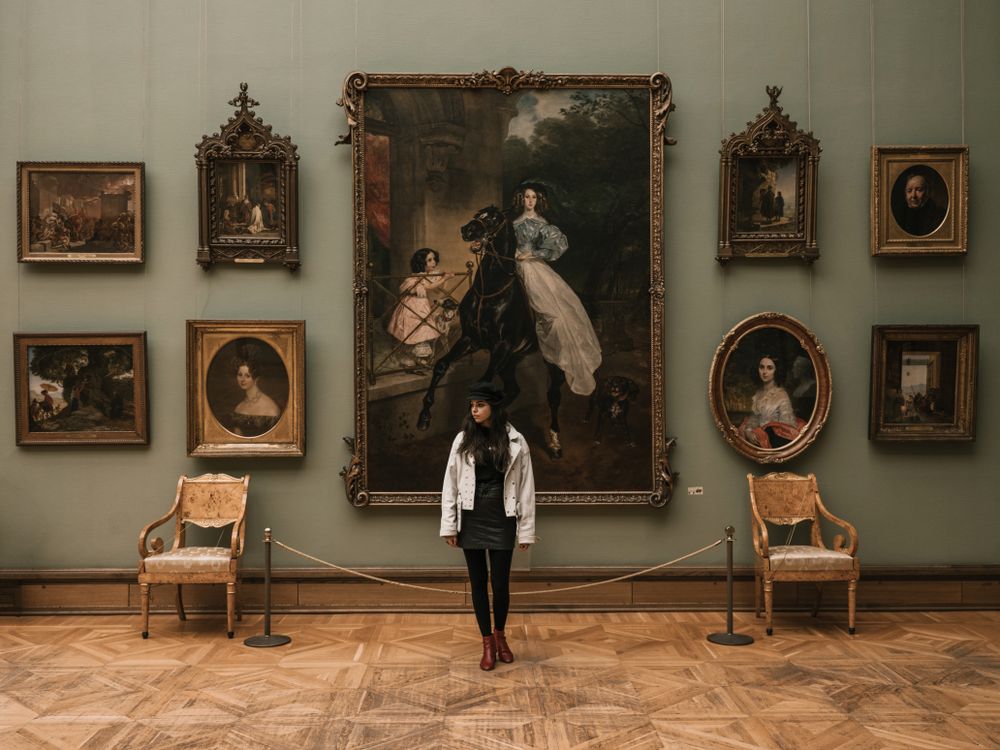
Dating the paint itself: the bomb pulse and the lead-white catch
Above-ground nuclear tests in the 1950s and early 1960s pushed atmospheric carbon-14 far above its natural level, with a peak in the mid-1960s. Plants absorbed that carbon. Linseed oil pressed from flax grown in those years therefore carries a signature that no earlier paint can have.
A forgery caught by its binder. A 2019 PNAS paper by Hendriks and nine coauthors (vol. 116, no. 27, pp. 13210-13214, doi 10.1073/pnas.1901540116) tested a folk-art picture signed "Sarah Honn" and dated May 5, 1866. The canvas fiber matched the 19th century. The oil binder did not. Its excess carbon-14 pointed to seeds harvested in 1958-1961 or 1983-1989. The painter, Robert Trotter, later admitted at trial that he made it in 1985. The team worked from a paint particle under 200 micrograms and purified it down to about 10 micrograms of carbon.
Dating the pigment. Lead white is made of hydrocerussite and cerussite, lead carbonates that take their carbon from the air when the pigment is manufactured. In Hendriks, Hajdas and seven coauthors (Radiocarbon 61(2):473-493, 2019, doi 10.1017/RDC.2018.101), lead white made by the traditional stack process returned ages that matched its production year. Lead white from other industrial processes returned depleted, too-old ages. A two-step method dates the carbonate pigment and the oil binder from one sample, and the two can give different ages. Calcite or dolomite filler is carbon-14 depleted and also pushes ages older (Sá et al., Scientific Reports 11:13210, 2021, doi 10.1038/s41598-021-91814-y).
What it means for a seller. The test disproves more easily than it proves. A binder from after 1950 under an 1866 date is decisive. A result inside the long stretch of the calibration curve where it flattens gives a wide date range, not a year. The PNAS authors also said it is not yet clear that forgers can be caught routinely, because sampling is difficult and measurement elaborate. The sampling is destructive, so a lab is an option for high-value or disputed works, not for every canvas that comes out of a closet.
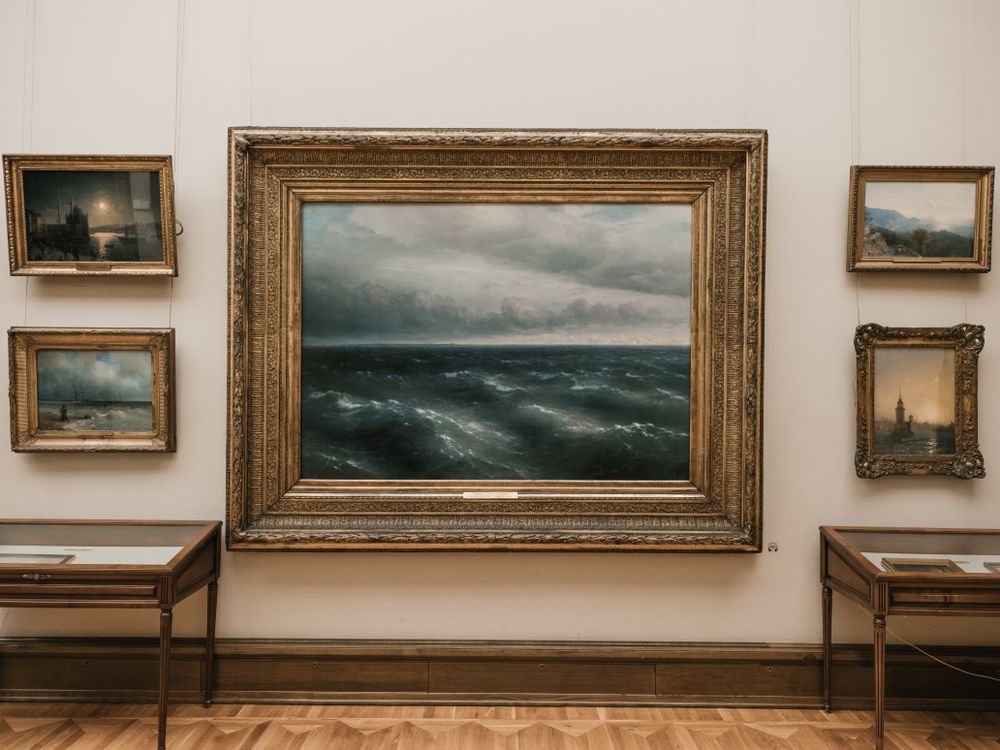
Light on the surface: ultraviolet, infrared and stroke analysis
Some of the most useful evidence needs a lamp, not a lab.
Ultraviolet fluorescence. Under UV, traditional natural-resin varnishes such as mastic and dammar glow a greenish yellow, according to the National Gallery in London. Retouching laid over varnish blocks the UV and shows as dark patches in an otherwise glowing area. Shellac is the exception and fluoresces orange. Missing glow does not prove missing varnish, because dirt can mask it and many synthetic resins do not fluoresce. Some pigments glow on their own: red lakes range from bright orange to pink. A dark patch is therefore a lead to follow, not a verdict.
Infrared reflectography. Dutch physicist J. R. J. van Asperen de Boer developed infrared reflectography in the 1960s. Near-infrared passes through many paint layers but is absorbed by carbon-based materials such as charcoal, black chalk and carbon-black ink, so an underdrawing shows as dark lines beneath the paint. Examiners compare it with the surface image and with the working habits of the named artist.
Brushstroke analysis, without craquelure. In 2008, Johnson, Hendriks and seven coauthors (IEEE Signal Processing Magazine 25(4):37-48, doi 10.1109/MSP.2008.923513) gave several research groups 101 high-resolution grayscale scans from the Van Gogh Museum and the Kröller-Müller Museum. Art historians had judged 23 unquestionably authentic. The groups used wavelet decomposition of brushstroke patterns, and the authors called the tools very early-stage.
A later paper moved to the individual stroke. Elgammal, Kang and Den Leeuw (arXiv:1711.03536, AAAI 2018, doi 10.1609/aaai.v32i1.11313) segmented 80,000+ strokes from 300 digitized drawings, mostly by Picasso, Matisse and Schiele. Per-stroke accuracy ran 70 to 90 percent and whole-drawing accuracy topped 80 percent. Their tests also flagged fakes with close to 100 percent accuracy in most settings. These were drawings in a controlled study, not oil paintings, and the result supports an examiner's eye rather than replacing it.
Not sure if your piece fits? Text a photo to (561) 465-3536 — we will tell you honestly and for free, with no obligation to sell.
Questions
Selling fine art & paintings in Pompano Beach
How can I tell if a painting in my Pompano Beach home is old without lab tests?
Start with the back. Look for a fixed-corner strainer or a stretcher with wedge-shaped keys, hand-forged or machine-made nails, and whether the tack holes in the canvas edge match the bars. Photograph the front, back, corners and signature in daylight and send them to us. Old hardware is a clue, not proof, because stretchers can be swapped.
Does South Florida humidity damage canvas paintings?
It can. The National Park Service advises keeping relative humidity below 65 percent, because above that mold becomes more likely. A closed-up Pompano Beach house in summer can pass that mark. If you see white or fuzzy bloom on the canvas or frame, do not wipe it. Move the piece to a dry, air-conditioned room and photograph it.
Do you use X-ray, radiocarbon or UV testing before buying?
Radiocarbon dating and X-radiograph weave analysis are lab methods, and radiocarbon needs a tiny paint sample, so they are reserved for high-value or disputed works. For most paintings in Broward homes we start with a careful look at the support, signature and surface, and we ask for provenance papers. If a piece warrants lab work, we will say so.
Where near Pompano Beach can I see documented paintings to compare with mine?
NSU Art Museum Fort Lauderdale, at One East Las Olas Boulevard, runs a Glackens study center built on bequests from painter William Glackens's son Ira. The museum describes more than five hundred works, 75 sketchbooks and over 1,000 photographs. Seeing one documented artist's surfaces and sketchbooks in person trains the eye. Check museum hours before you go.
What should I avoid doing before selling an estate painting in Broward County?
Do not clean, revarnish, retouch, or take the canvas off its stretcher. Each of those can hide or destroy evidence examiners rely on, such as original varnish, retouching visible under UV, and tack holes. Keep labels, receipts and gallery stickers on the back. Photograph everything before you move it, then send us the images.
We also buy