
No. 05
Estate & Antique Jewelry
in Pompano Beach
Victorian, Deco, and signed pieces.
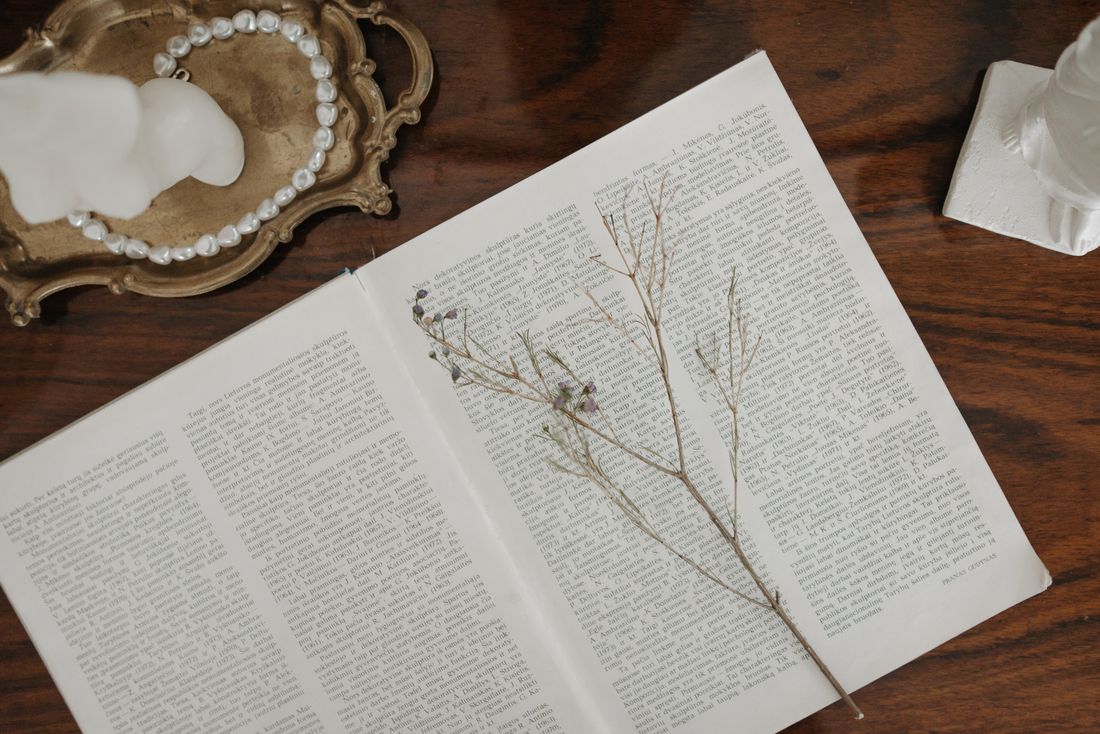
A pearl strand, a star sapphire ring and a locket holding a braid of hair look simple, yet each carries a physical record of how it was made. An X-ray shows whether a pearl grew around a bead. Needles a few hundred nanometers thick explain a star. The way a stone is set can date a piece to within a few decades. This is how we read those clues in a Pompano Beach living room, and where a laboratory has to take over.
What we look for
- Victorian, Edwardian, and Art Deco jewelry
- Signed houses: Cartier, Tiffany, Van Cleef, and others
- Gold, platinum, and gemstone pieces
- Loose diamonds and antique wristwatches
Pearls: what an X-ray sees that the eye cannot
An inherited strand in Broward County is usually called "real pearls", which can mean three different things: natural, bead-cultured, or non-bead cultured. The eye cannot sort them. A laboratory X-ray usually can. On a radiograph a natural pearl shows onion-like growth layers around a small dark point at the center. A bead-cultured pearl shows the bead, typically a polished sphere of freshwater mussel shell, under a coat of nacre. A non-bead cultured pearl shows irregular structures that follow its outline, left by the grafted tissue.
The reference study is Krzemnicki and four co-authors in Gems & Gemology 46(2), 2010. Of the 16 pearls whose results they report, 6 were natural, 4 beaded and 6 non-beaded, and film radiography identified all four beaded pearls and all but two of the other twelve. Each film took about 20 minutes with the pearl immersed in lead nitrate solution. Micro-CT resolved 6.4 to 13.8 micrometers per voxel, took about five hours per pearl including set-up, and the instrument cost about US$550,000 in 2010. Two lessons for estate pearls: drilling can remove the very center a natural pearl is identified by, and a metal mount blurs CT images but is less of an obstacle on a radiograph.
Why nacre glows is now measured, not guessed. A 2021 PNAS paper (arXiv:2103.05037, Gim, Hovden and colleagues) sectioned a 2.5 mm non-bead "keshi" Akoya pearl grown about 18 months in Pinctada imbricata fucata off eastern Australia and measured every layer: 2,615 aragonite tablets laid down in 548 days, four to five a day. Mature tablets averaged about 340 nanometers thick, so the stack diffracts visible light, with organic sheaths only 10 to 20 nanometers thick between them. Nacre is calcium carbonate, so perfume, hairspray and acids attack it. Bead culture became commercial in Japan in 1916, so a strand with a documented history before then is a natural candidate, but only the X-ray decides.
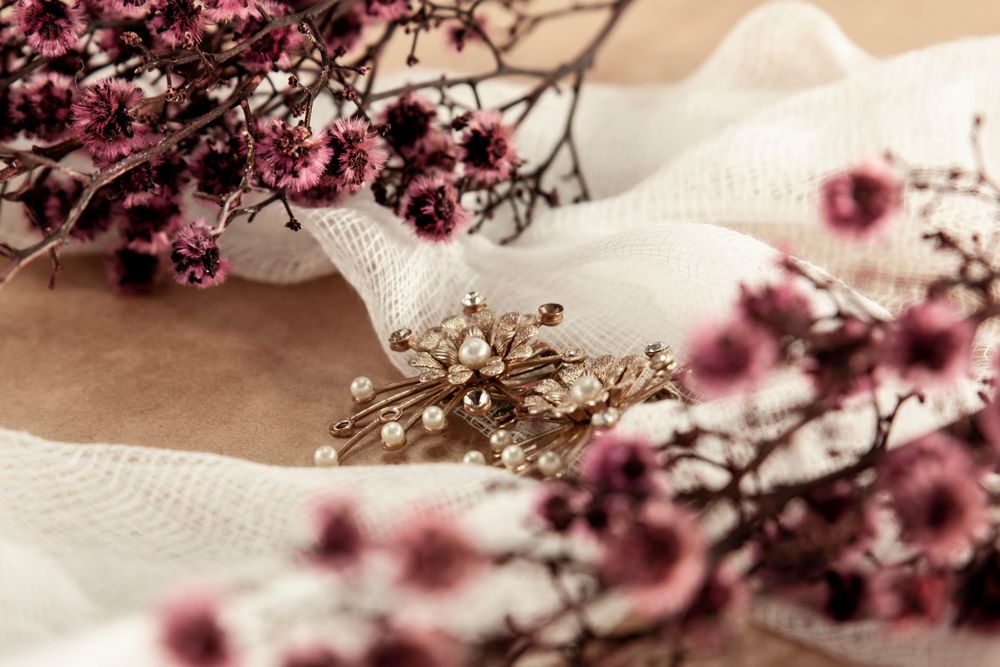
Star, cat's-eye, moonstone and opal: light as evidence
Four optical effects turn up in Broward estates, and each mechanism doubles as an identification clue.
- Star (asterism). Sub-microscopic rutile needles, called silk, lie in three sets 60 degrees apart in corundum. Each set throws a ray perpendicular to its needles, so a domed cabochon shows six rays.
- Cat's-eye (chatoyancy). Parallel fibers or hollow tubes reflect light into one sharp band when the stone is cut with the fibers parallel to the base. An unqualified "cat's-eye" means chrysoberyl.
- Moonstone and labradorite. Moonstone's blue-white sheen comes from alternating layers of orthoclase and albite; the thinner the albite layers, the bluer the light. It is only 6 to 6.5 on the Mohs scale with perfect cleavage, so edges chip. Labradorite flashes when slow cooling has left lamellae spaced about 128 to 252 nanometers apart.
- Opal. Silica spheres about 150 to 300 nanometers across, stacked in a close-packed lattice, diffract light, and sphere size sets the color. Opal holds 3 to 21 percent water, usually 6 to 10, and rates 5.5 to 6 on the Mohs scale. Stewart and colleagues (arXiv:1001.0438, Journal of Crystal Growth 312, 2010) propose the spheres self-assemble in alkaline fluid at about pH 9 to 10.
The catch is the star. Linde's first patent application for synthetic star corundum dates from August 1947, using 0.1 to 0.3 percent titanium dioxide in the melt, and Wiede's Carbidwerk in Bavaria made star corundum from the mid-1950s to the late 1970s. Heating at 1,100 to 1,500 °C lets rutile needles precipitate in the same orientation as natural silk (Schmetzer, Gilg and Bernhardt, Gems & Gemology 53(3), 2017), so orientation proves nothing. What does separate them: curved growth layers, round gas bubbles and, in Wiede's stones, a needle-free clear core. Some Wiede's cabochons carry a sandblasted "W" on the back. A star ring from the 1950s to 1970s deserves a lab check before anyone quotes a natural price.
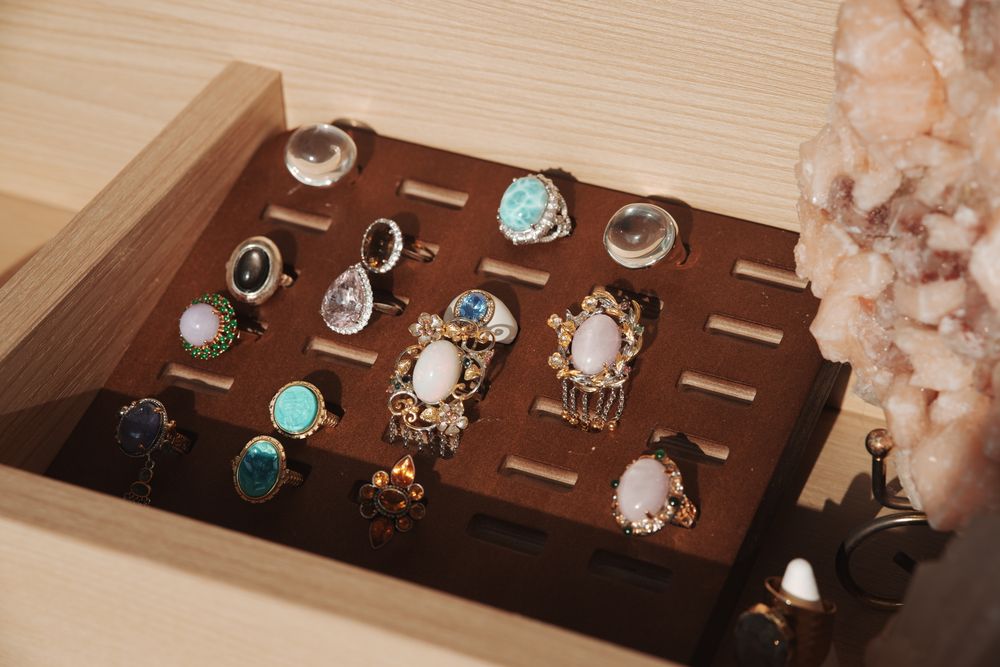
Reading construction: foils, collets, cuts, hair and jet
Settings date a piece before any stone is tested. Georgian work (1714 to 1837) is typically closed-back, with thin foil under pale or included stones to lift their color by candlelight. The foil is the weakness: water behind it ruins it, so we never soak a piece. Open-back settings are unlikely to predate the Regency. In a cut-down setting the metal is pared back so little shows beside the stone; dealers place it mainly in Georgian, Victorian and Edwardian work.
Cuts add a second clock. The rose cut dates to the mid-16th century in Antwerp: flat base, no table, usually 12 or 24 triangular facets. Old mine cuts are cushion-shaped early brilliants from before mechanical bruting could round a stone. The rounder old European cut followed and dominated roughly 1890 to 1930. Pinchbeck, a copper-zinc alloy made to look like gold by London watchmaker Christopher Pinchbeck (died 1732), has no agreed recipe, with published figures from about 83:17 to 93:7 copper to zinc. It faded after England legalized lower-carat gold in 1854.
Mourning jewelry leans on organic materials. After Prince Albert died in 1861, Queen Victoria made long public mourning the norm; around 1870 about 1,400 people in roughly 200 workshops near Whitby worked jet, a Jurassic fossil wood, while black glass ("French jet") and ebonite met the demand. Hair sat under glass or quartz, or was braided into bracelets. The old hot-needle test (jet smells of coal) scars the piece, so we do not use it on an intact surface.
- Amber: hardness 2 to 2.5, specific gravity 1.06 to 1.10, so it floats only in strongly salty water. Baltic amber yields 3 to 8 percent succinic acid, Bakelite has been sold as "African amber", and Dominican amber, which fluoresces under ultraviolet light, is younger at roughly 15 to 20 million years against about 44 to 49 for Baltic.
- Coral: calcium carbonate at hardness 3.5; the town of Torre del Greco has worked red coral since at least the 15th century.
Not sure if your piece fits? Text a photo to (561) 465-3536 — we will tell you honestly and for free, with no obligation to sell.
Questions
Selling estate & antique jewelry in Pompano Beach
How do I know if my mother's pearls from her Pompano Beach home are natural or cultured?
Not by eye. An X-ray shows concentric layers in a natural pearl and a bead or grafted-tissue structure in a cultured one. We can tell you what is likely and whether a laboratory radiograph is worth the fee. Meanwhile keep the strand away from perfume, hairspray and sunscreen, which attack the nacre.
Is the star sapphire in my 1960s ring natural?
Possibly, but synthetic stars were widely made from 1947 through the 1970s. Under a loupe, curved growth bands and round bubbles point to synthetic. The needles can be oriented the same way in both, and a stone without those clues is not proven natural, so a laboratory report is the only safe answer before a price is quoted.
I have Dominican amber and old coral from relatives. How do you tell real from plastic?
Amber is light, with a specific gravity of 1.06 to 1.10, and floats only in strongly salty water; most glass and Bakelite sink. Dominican amber glows under ultraviolet light. Coral is calcium carbonate at hardness 3.5, so it scratches and etches easily. We test without marking the piece.
What paperwork happens when I sell jewelry to a dealer in Pompano Beach?
Florida's secondhand dealer law, Chapter 538, requires covered dealers to record your government photo ID, your right thumbprint and a photographed description of each item, and to report the purchase to law enforcement within 24 hours. Jewelry and gemstones must be held 30 days before resale, and records kept three years.
Will you come to my home in Pompano Beach or elsewhere in Broward County?
Yes. We visit homes across Pompano Beach and Broward County, examine each piece under a loupe, weigh and test it in front of you, and pay the same day for what we buy. If a pearl strand, opal or star stone needs a laboratory report first, we say so plainly. For one ring, a few photos by text are enough to start.
We also buy